Abstract
Age estimation from finger vein images has been widely considered impractical due to severe demographic biases in public datasets and physiological confounding factors like gender. To overcome these limitations, we propose MAGE-Vein, a novel multi-instance, multi-task learning framework. Our approach extracts robust structural aging signs by employing a hybrid feature-level fusion of three fingers, effectively suppressing local imaging noise. Furthermore, simultaneous optimization of gender classification conditions the network to effectively eliminate gender-specific vascular variations. Evaluated on a demographically balanced dataset of 402 subjects, MAGE-Vein achieves a mean absolute error of 6.12 years and a correlation of 0.880. Our results not only overturn the conventional consensus regarding the limitations of the finger vein modality but also demonstrate that previous estimation failures were primarily artifacts of biased public datasets.
Proposed Method
Our method employs a multi-instance fusion strategy that integrates feature representations from three fingers (index, middle, and ring fingers) of the same subject at the feature level. This approach effectively smooths out local imaging noise caused by variations in finger pressure or blood flow, enabling the stable extraction of global age-related vascular changes common to the entire vascular system. Furthermore, the framework simultaneously optimizes age estimation and gender classification using a shared backbone network. This multi-task strategy conditions the network on gender-specific vascular traits, such as thickness and contrast, making it possible to separate and extract structural changes associated with aging.
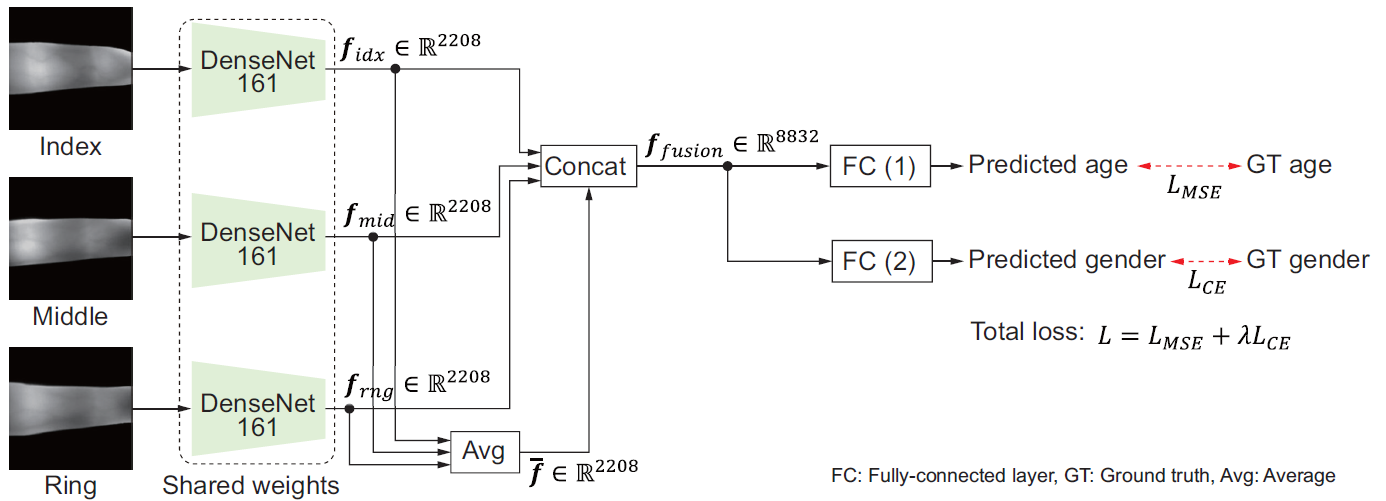
Figure 1: Overview of the proposed method.
Qualitative Results
As performance metrics for age estimation, we employ Mean Absolute Error (MAE), the correlation coefficient (Corr.), and the Cumulative Score at 5 years (CS@5). Furthermore, to evaluate the stability of the model, the standard deviation (Std.) of the individual estimation errors is calculated. Compared to the existing method, the proposed method with data augmentation (Proposed w/ Aug.) achieved a significant improvement.
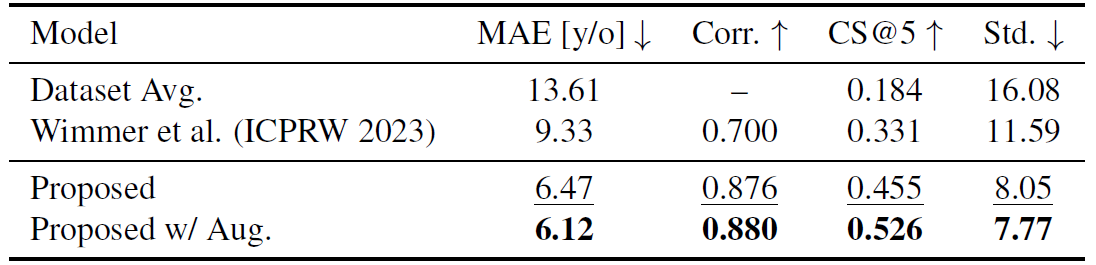
Table 1: Comparison of age estimation accuracy.
BibTeX
@article{Tanaka2026MageVein,
  title={MAGE-Vein: Multi-Instance Age and Gender Estimation from Finger Vein Images},
  author={"Katsuki, Tanakaa and Koichi, Ito and Takafumi, Aoki and Masakazu, Fujio and Yosuke, Kaga and Kanade, Oshima and Kenta, Takahashi"},
  journal={2026 IEEE International Joint Conference on Biometrics (IJCB 2026)},
  year={"2026"},
  month = {sep}
}